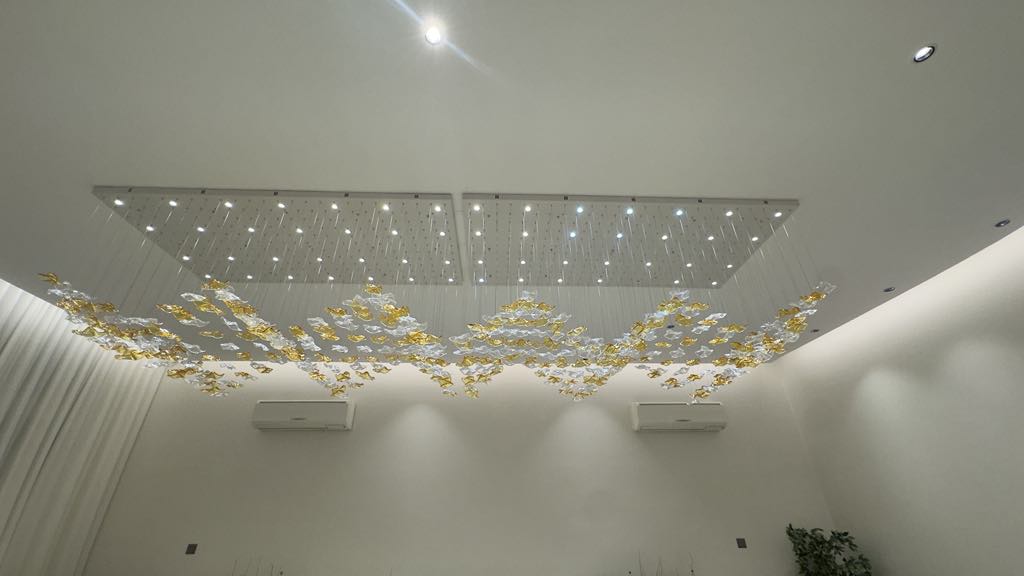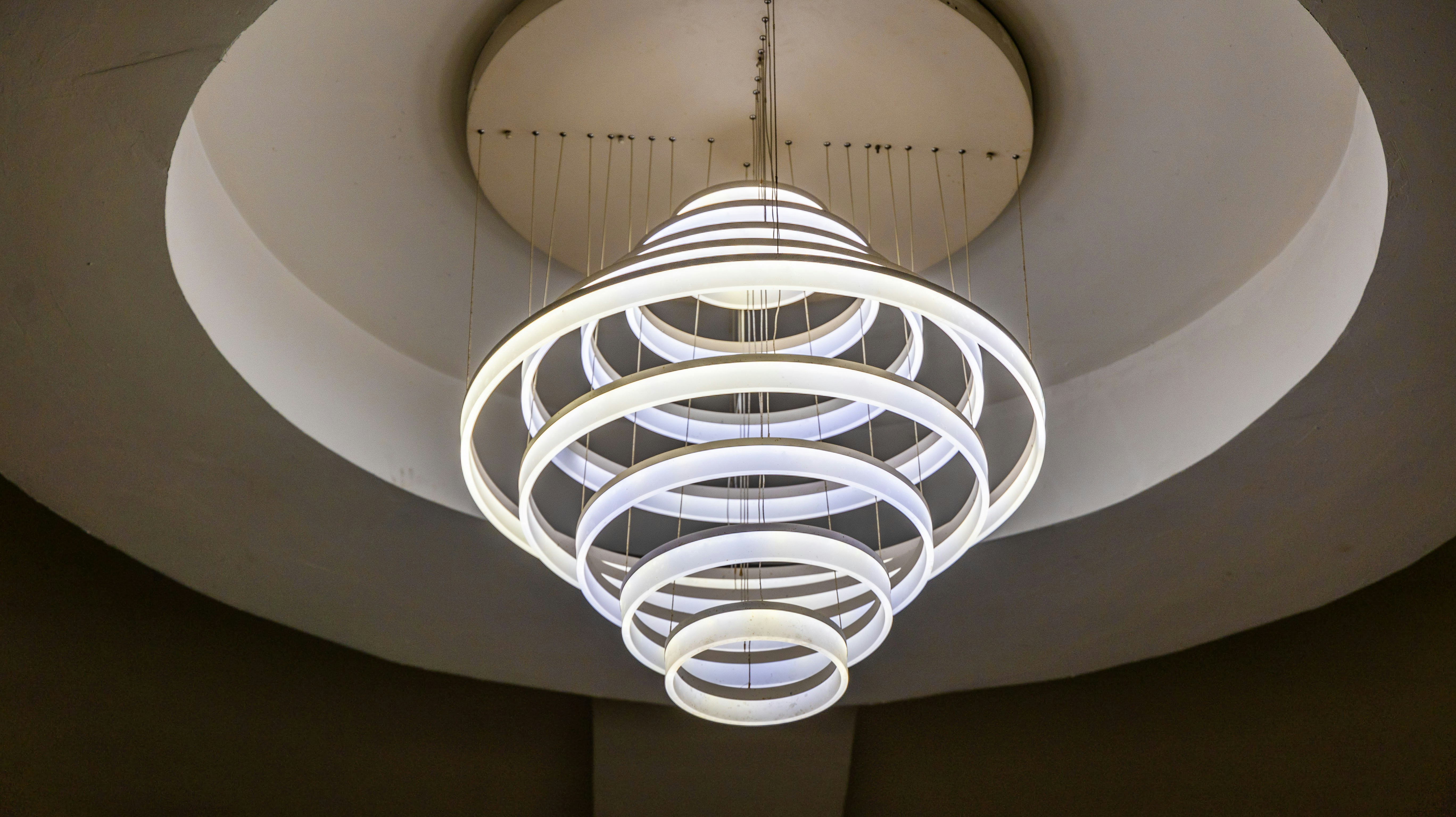
While chandeliers add beauty to any space, improper installation or maintenance can create serious safety hazards. This guide covers the most common risks and how to prevent them, with specific considerations for UAE homes.
1) Structural failure and falling fixtures
The risk: Inadequate mounting causing the chandelier to fall, potentially causing injury or property damage.
Prevention:
- Never mount heavy chandeliers to gypsum board alone—must anchor to concrete slab or structural member
- Use mounting hardware rated for at least 3x the chandelier's weight
- For chandeliers over 30kg, consider secondary safety cable
- Have installations inspected by qualified professionals
- Re-check mounting hardware annually, especially in high-humidity areas
2) Electrical hazards
The risks: Electric shock, short circuits, and fire from improper wiring.
Prevention:
- Always turn off power at the circuit breaker before any work
- Use a voltage tester to confirm power is off
- Ensure all connections are made with proper wire nuts or terminal blocks
- Never exceed the fixture's rated wattage
- Use bulbs appropriate for the fixture (some chandeliers have maximum wattage limits)
- Ensure wiring is not pinched or damaged during installation
- In UAE's humid coastal areas, check for corrosion annually
3) Fire hazards
The risks: Overheating causing fire, especially with high-wattage bulbs or poor ventilation.
Prevention:
- Never exceed manufacturer's maximum wattage recommendations
- Keep flammable materials (drapes, decorations) at least 50cm from chandelier
- Ensure adequate ventilation—don't install in fully enclosed spaces without airflow
- Switch to LED bulbs which run much cooler than incandescent
- Check for overheating during first few uses—if canopy or wiring gets very hot, reduce wattage or consult electrician
- Never use damaged or frayed wiring
4) Installation and maintenance fall hazards
The risk: Falls from ladders during installation, cleaning, or bulb changes.
Prevention:
- Use proper ladders rated for your weight plus equipment
- Never stand on furniture, counters, or unstable surfaces
- Have someone spot you when working at height
- For high ceilings (12+ feet), hire professionals with proper equipment
- Consider LED bulbs to reduce frequency of bulb changes
- Install chandeliers with lowering mechanisms for very high ceilings
5) Crystal and glass hazards
The risks: Falling crystals or glass components causing injury or damage.
Prevention:
- Ensure all crystals and glass components are properly secured
- Check connections periodically—vibration from doors, AC, or foot traffic can loosen components
- During cleaning, work carefully to avoid dislodging pieces
- Keep area below chandelier clear during installation and maintenance
- In earthquake-prone areas, use additional securing methods
6) Ceiling fan and chandelier combinations
The risk: Improper installation of combination units or installing chandelier too close to fan.
Prevention:
- Only use fixtures specifically designed as fan-chandelier combinations
- Never hang a regular chandelier from a ceiling fan
- Maintain at least 1 meter clearance between separate fan and chandelier
- Ensure fan-rated electrical box is used for combination units
7) Children and pet safety
The risks: Children pulling on hanging crystals, pets knocking into low fixtures.
Prevention:
- Maintain minimum 7-foot clearance from floor in high-traffic areas
- In children's rooms, consider flush or semi-flush fixtures instead of hanging chandeliers
- Secure loose crystals that might be tempting to pull
- Avoid chandeliers with long hanging chains in homes with young children
8) Outdoor and high-humidity installations
The risks: Corrosion, electrical issues from moisture, especially in UAE's coastal humidity.
Prevention:
- Use fixtures rated for outdoor/damp locations if installing in covered outdoor areas
- In bathrooms or near pools, use appropriate IP-rated fixtures
- Check for corrosion on mounting hardware and electrical connections annually
- Use marine-grade or stainless steel hardware in coastal areas
- Ensure proper grounding for outdoor installations
9) Warning signs that require immediate attention
Contact a professional immediately if you notice:
- Chandelier hanging at an angle or appearing loose
- Flickering lights not resolved by bulb replacement
- Burning smell or discolored wiring
- Excessive heat from canopy or ceiling
- Cracks in ceiling around mounting point
- Buzzing or humming sounds from fixture
- Moisture or water stains near fixture
10) Professional inspection schedule
We recommend professional inspection:
- After installation: Within first month to ensure proper settling
- Annual inspection: For all chandeliers, especially heavy or high-ceiling installations
- After any building work: Vibrations from construction can affect mounting
- Before selling property: Ensure all fixtures are safe for new owners
Remember: Safety should never be compromised for aesthetics. When in doubt, consult qualified professionals. The cost of proper installation and maintenance is minimal compared to the potential consequences of failure.
Need Professional Chandelier Installation?
Our expert team provides professional chandelier installation services across Dubai, Abu Dhabi, and all of the UAE.
Related Articles
Linear Chandelier Installation in Dubai: Dining Tables, Kitchen Islands, Multi-Cable Leveling, and Cost Guide
Luxury Penthouse & High-Rise Chandelier Installation in Dubai: Concrete Slabs, Permits, Sizing, and Cost Guide
Master Bedroom Chandelier Installation in Dubai: Heights Over Beds, Dimming, Switch Wiring, and Cost Guide